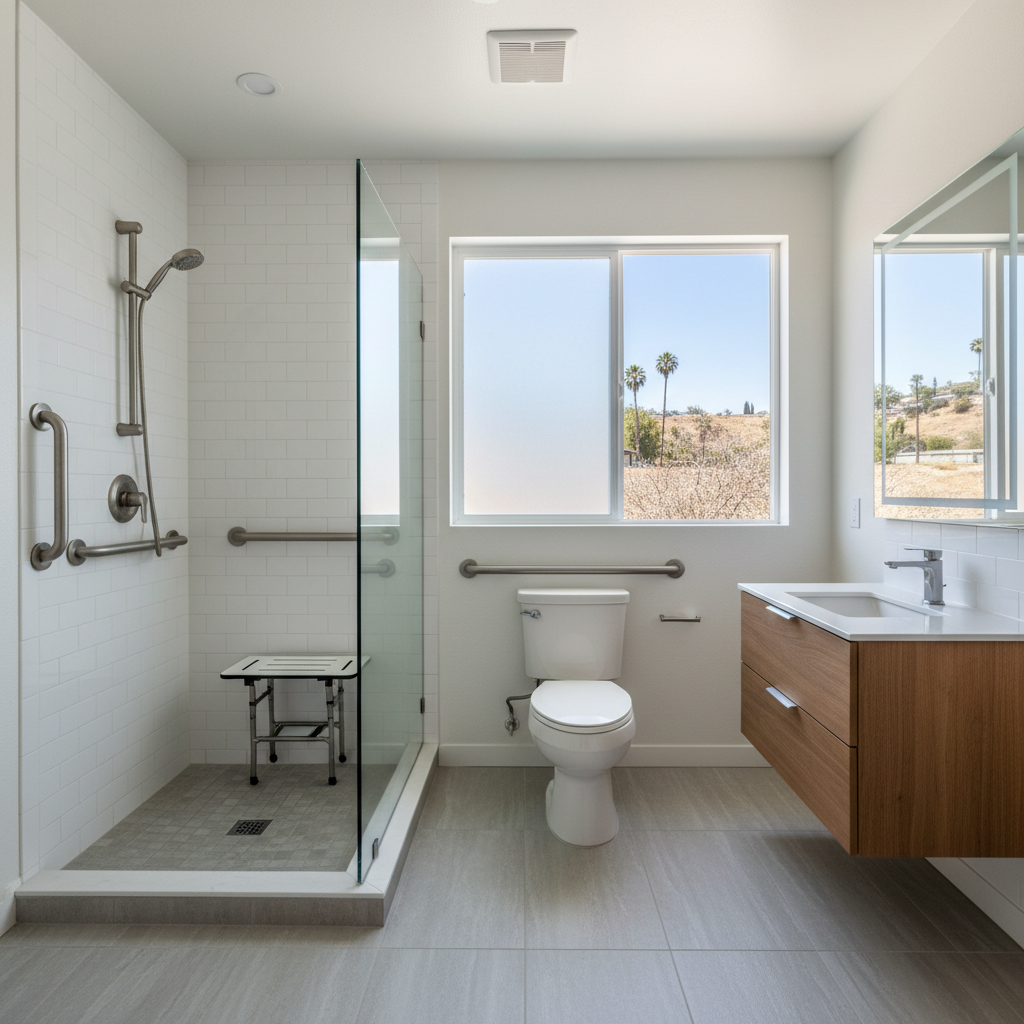
You're looking to make your bathroom more accessible, and that's a smart move. Whether it's for yourself, a family member, or just future-proofing your home, a well-designed accessible bathroom can make a huge difference in comfort and independence. But I've seen plenty of folks in La Mirada make some pretty common mistakes that end up costing them time, money, and a whole lot of frustration. Let's talk about what to watch out for.
Mistake #1: Not Planning for True Accessibility
This is probably the biggest one. People often think 'accessible' just means a grab bar or a roll-in shower. And while those are definitely part of it, true accessibility is about the whole space working together. I've walked into homes, especially some of those older ranch-style houses near Biola University, where folks tried to squeeze a roll-in shower into a space that's just too small for a wheelchair to maneuver properly. You need enough turning radius – usually 60 inches – for a wheelchair or even a walker. It's not just about getting in; it's about being able to turn around comfortably, reach controls, and use the fixtures without feeling cramped or unsafe.
Don't just think about what you need now; think about what you might need in five or ten years. A little extra space or a slightly wider doorway now can save you a whole lot of hassle later. We're talking about things like toilet height, sink clearance, and even the placement of towel bars. Every detail matters.
Mistake #2: Going with the Cheapest Bid Without Asking the Right Questions
Look, I get it. Everyone wants to save a buck. But when it comes to something as critical as an accessible bathroom, the cheapest bid can often be the most expensive in the long run. I've seen contractors who don't specialize in accessible design try to take these jobs, and they just don't understand the nuances. They might install grab bars that aren't properly reinforced, or put in a shower pan that doesn't drain right, leading to standing water – a huge slip hazard.
Here's what you need to ask:
- Do they have specific experience with ADA compliance or universal design principles?
- Can they show you examples of other accessible bathrooms they've built?
- Are they licensed and insured? Always check this.
- Do they understand the local La Mirada building codes for accessible features?
A good contractor, like us at La Mirada Bathroom Construction, will be able to answer these questions confidently and show you their portfolio. If they hem and haw, that's a red flag.
Mistake #3: Forgetting About the Small Details (That Aren't So Small)
It's easy to focus on the big stuff – the shower, the toilet. But the little things can make or break an accessible bathroom. Think about these:
- Lighting: Is it bright enough? Are the switches easy to reach and operate, even for someone with limited dexterity?
- Flooring: Are you choosing non-slip tiles? A smooth, continuous surface is best, avoiding thresholds that can trip someone or impede a wheelchair.
- Faucets: Lever-style handles are much easier to use than knobs, especially for people with arthritis.
- Storage: Can someone in a wheelchair easily reach toiletries? Open shelving or pull-out drawers at an accessible height are far better than high cabinets.
- Doorways: Are they wide enough (at least 32 inches clear opening)? And are the door handles lever-style instead of knobs?
These aren't just minor upgrades; they're essential components of a truly functional accessible space. Overlooking them means you'll have a bathroom that's only partially accessible, and that defeats the purpose.
Mistake #4: Not Considering Future Needs
This goes back to planning, but it's worth its own point. Maybe right now you just need a walk-in shower. But what if in a few years, a wheelchair becomes necessary? Or a caregiver needs more space to assist?
When we work on projects in La Mirada, we always talk about future-proofing. It might mean roughing in blocking in the walls for future grab bars, even if you don't install them now. Or choosing a vanity that can be easily converted to a roll-under sink later. It's about making choices today that won't require another major renovation down the road. You want a design that can adapt as needs change, not one that becomes obsolete.
Building an accessible bathroom is an investment in comfort, safety, and independence. Don't cut corners or overlook critical details. Do your homework, ask the tough questions, and work with someone who truly understands accessible design. You'll be glad you did.